


.webp)
Retour à Installations
Palefroi homographique
2022
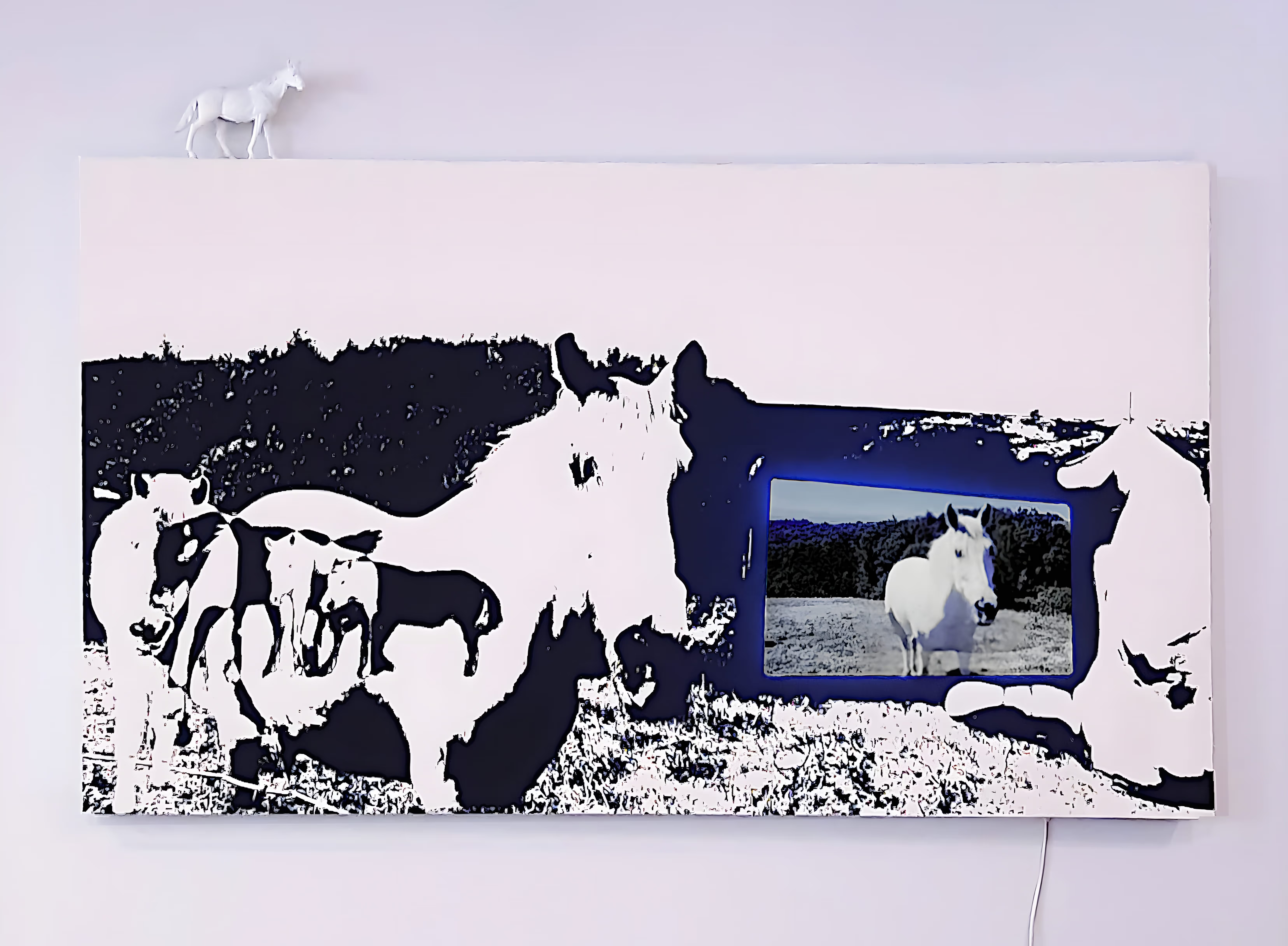
Le point de départ de ce tableau-vidéo est une déclaration rapportée par une amie: « le smartphone est le tube de peinture du vingtième ! ». L’auteur de cette phrase, bien qu’il me soit inconnu, faisait ainsi référence à la révolution moderniste en peinture. C’est grâce à l’invention du tube de peinture que les artistes ont pu sortir de leurs ateliers. Ils ont alors commencé à peindre sur le motif au cœur la nature et à s’éloigner peu à peu d’une figuration réaliste. Cette révolution était aussi motivée par la démocratisation de la photographie, inventée quelques décennies plus tôt. Le parallèle avec notre époque m’a semblé assez évident. Désormais, presque tout le monde a une caméra à chaque instant entre ses doigts. Il me semblait intéressant d’interroger encore une fois la nécessité d’une figuration réaliste en peinture ou en dessin ; nonobstant la possibilité d’obtenir un résultat bien plus fidèle à la réalité avec son téléphone.
Le choix du sujet du cheval est une référence directe à la polémique du galop du cheval, résolu par Eadweard Muybridge au moyen d’un système de chronophotographie, ancêtre du cinématographe. Le cheval a les quatre fers en l’air lorsqu’il regroupe ses pattes au galop ! Je décompose ici sur la toile le pas d’une jument. Ce faisant, le questionnement des avant-gardes du début du vingtième sur le mouvement en peinture est remis au goût du jour, là encore, dans un contexte de révolution technologique. Il est aussi possible d’y voir un clin d’œil à l’art pariétal où l’on retrouve beaucoup de représentations de chevaux et une figuration figée du mouvement.
Le choix du sujet du cheval est une référence directe à la polémique du galop du cheval, résolu par Eadweard Muybridge au moyen d’un système de chronophotographie, ancêtre du cinématographe. Le cheval a les quatre fers en l’air lorsqu’il regroupe ses pattes au galop ! Je décompose ici sur la toile le pas d’une jument. Ce faisant, le questionnement des avant-gardes du début du vingtième sur le mouvement en peinture est remis au goût du jour, là encore, dans un contexte de révolution technologique. Il est aussi possible d’y voir un clin d’œil à l’art pariétal où l’on retrouve beaucoup de représentations de chevaux et une figuration figée du mouvement.

The Homographic Palfrey
2022
The starting point for this video piece is a statement reported by a friend: “The smartphone is the paint tube of the twentieth century!” Although the author of this phrase is unknown to me, it refers to the modernist revolution in painting. Thanks to the invention of the paint tube, artists were able to leave their studios. They began painting en plein air, directly from nature, gradually moving away from realistic representation. This revolution was also driven by the democratization of photography, which had been invented a few decades earlier. The parallel with our own era seems quite obvious. Today, almost everyone carries a camera at all times in their hands. I found it interesting to question, once again, the necessity of realistic representation in painting or drawing, despite the possibility of achieving far more faithful depictions using a smartphone.
The choice of the horse as the subject directly references the famous controversy over a horse’s gallop, resolved by Eadweard Muybridge through his chronophotography system, the ancestor of cinematography. The horse lifts all four hooves off the ground when it gathers its legs mid-gallop. Here, I deconstruct the gait of a mare on the canvas. In doing so, the questions explored by early twentieth-century avant-gardes regarding movement in painting are revisited, once again, in a context of technological revolution.It is also possible to read this work as a nod to prehistoric cave art, which frequently depicts horses in motion yet in a frozen, static form.
The choice of the horse as the subject directly references the famous controversy over a horse’s gallop, resolved by Eadweard Muybridge through his chronophotography system, the ancestor of cinematography. The horse lifts all four hooves off the ground when it gathers its legs mid-gallop. Here, I deconstruct the gait of a mare on the canvas. In doing so, the questions explored by early twentieth-century avant-gardes regarding movement in painting are revisited, once again, in a context of technological revolution.It is also possible to read this work as a nod to prehistoric cave art, which frequently depicts horses in motion yet in a frozen, static form.

.webp)
.webp)
.webp)
Webdesign
Céline Martinez